

Good storage should make a home easier to live in without making it look like every wall has been covered with cabinets.
Jaroi Interiors provides custom storage solutions in Delhi NCR for homeowners who need furniture designed around the actual dimensions of their rooms, the things they own and the way their household uses each space. Instead of relying entirely on standard-sized storage furniture, custom planning can make better use of wall height, corners, recesses, unused areas and awkward layouts.
From full-height wardrobes and living room cabinets to TV storage, bookshelves, crockery units, entryway furniture, study storage and bespoke wooden cabinets, each solution can be developed to combine capacity, accessibility and a clean interior appearance.
Storage Starts With What You Need to Keep
The first question should not be “Which cabinet should I buy?”
It should be “What exactly needs to be stored?”
Clothes, books, shoes, luggage, crockery, documents, electronics, toys, cleaning supplies and decorative objects all require different types of storage. A useful storage plan assigns an appropriate place to each category rather than putting everything behind identical doors.
Jaroi Interiors can develop storage around requirements such as:
- Everyday clothing
- Seasonal clothing
- Shoes and accessories
- Books and documents
- Crockery and serving items
- Kitchen supplies
- Children’s belongings
- Home-office equipment
- Electronics and media equipment
- Household supplies
- Luggage and travel items
- Decorative collections
This makes the storage more purposeful and can reduce the amount of unused internal space.
Use the Height of the Room More Intelligently
Many homes have considerable vertical space above conventional furniture.
Floor-to-ceiling storage can make use of this otherwise unused area, particularly where floor space is limited. Higher compartments can be reserved for items that are needed less frequently, such as suitcases, winter bedding, festive decorations or seasonal belongings.
The lower and middle sections can then remain dedicated to things used regularly.
This type of vertical planning can be particularly useful in apartments where every square foot of floor area matters.
The Space Behind a Door Can Matter Too
Storage planning is not only about large walls.
Narrow gaps, corners, wall recesses, areas beside wardrobes and spaces around entrances can sometimes accommodate useful furniture when their dimensions are considered carefully.
Examples include:
- Slim entryway cabinets
- Narrow utility storage
- Corner shelves
- Tall side cabinets
- Recessed display units
- Shoe storage
- Linen cabinets
- Small home-office storage
- Built-in niches
The important point is to use these spaces only when the resulting furniture improves functionality. Filling every empty corner with cabinetry can make a home feel unnecessarily crowded.
Wardrobes Designed Around Your Actual Collection
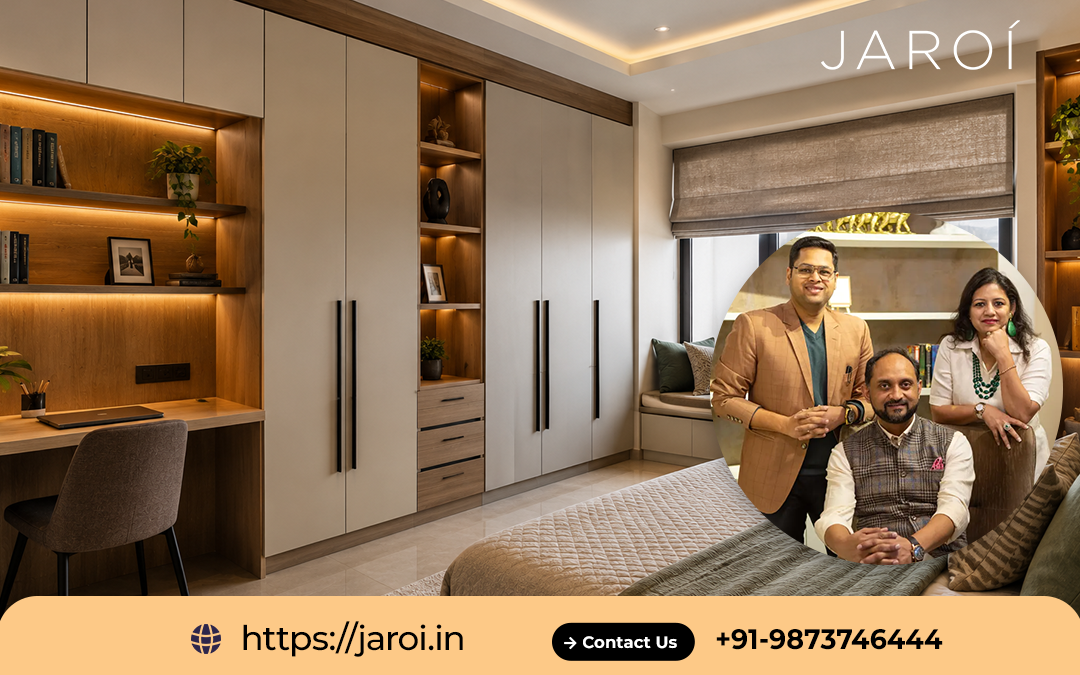
A wardrobe should reflect what you own rather than simply provide a row of shelves.
Someone with many formal clothes may need more hanging space. Another homeowner may require larger drawers, shoe storage or dedicated areas for folded clothing.
Custom wardrobe interiors can therefore be divided according to individual requirements, including:
- Long-hanging sections
- Short-hanging sections
- Adjustable shelves
- Drawers
- Shoe storage
- Accessory compartments
- Linen storage
- Seasonal storage
- Loft cabinets
- Dressing areas
The external appearance can then be coordinated with the bedroom rather than treating the wardrobe as a separate piece of furniture.
Living Room Storage That Keeps Clutter Out of Sight
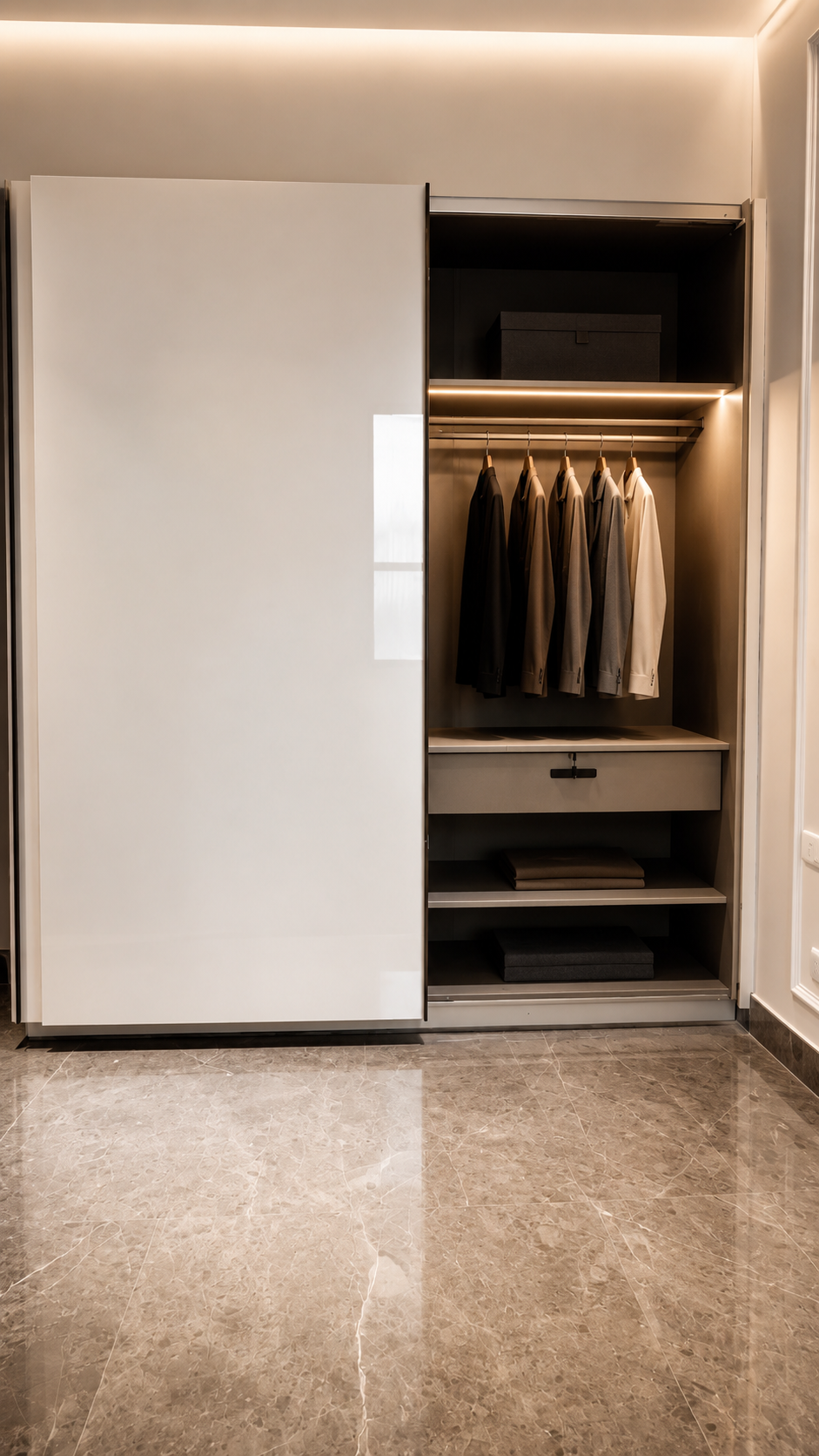
Living rooms accumulate many small items over time.
Books, remotes, cables, documents, games, children’s belongings and electronic accessories can quickly occupy visible surfaces.
Custom storage can combine open display areas with closed cabinets so that frequently displayed items remain accessible while everyday clutter can be concealed.
A single coordinated furniture wall may incorporate:
- TV unit
- Closed storage
- Open shelves
- Display niches
- Bookshelves
- Drawers
- Media equipment storage
For living room projects, these elements can be planned alongside custom living room furniture so that the storage does not look like an unrelated addition.
Make the Entrance More Functional
The entrance is often one of the least planned storage areas in a home.
Yet it is where many everyday items are handled—shoes, keys, bags, umbrellas and other belongings.
Depending on the available space, a custom entryway unit can include a combination of seating, drawers, shoe storage, shelves, hooks and concealed compartments.
The design should remain relatively shallow where circulation is tight so that storage does not interfere with the main passage into the home.
Dining Areas Can Benefit From Purpose-Built Storage
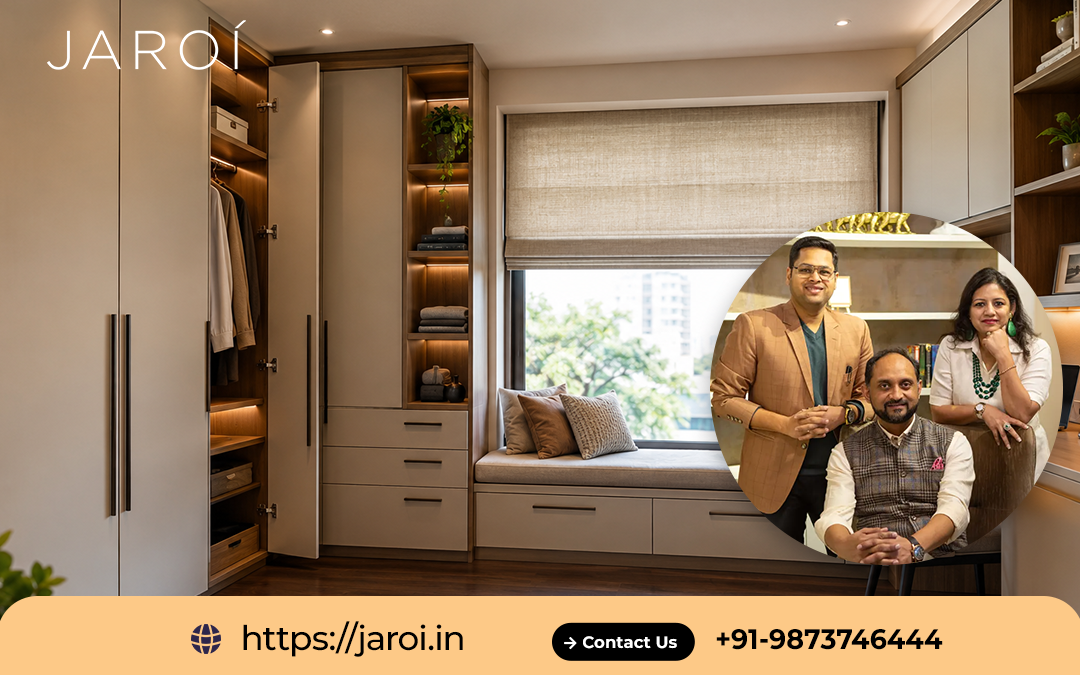
Dining rooms often need more storage than homeowners initially expect.
Crockery, glassware, serving pieces, table linen and occasionally barware may all need dedicated locations.
Instead of using unrelated cabinets, a custom crockery or dining storage unit can be designed around the available wall.
Depending on the room, it may include:
- Closed crockery cabinets
- Glass-front display sections
- Drawers
- Open shelves
- Serving storage
- Cutlery compartments
- Decorative display areas
Materials and finishes can be coordinated with the dining furniture and adjoining living room.
Kitchen Storage Should Follow the Way You Cook
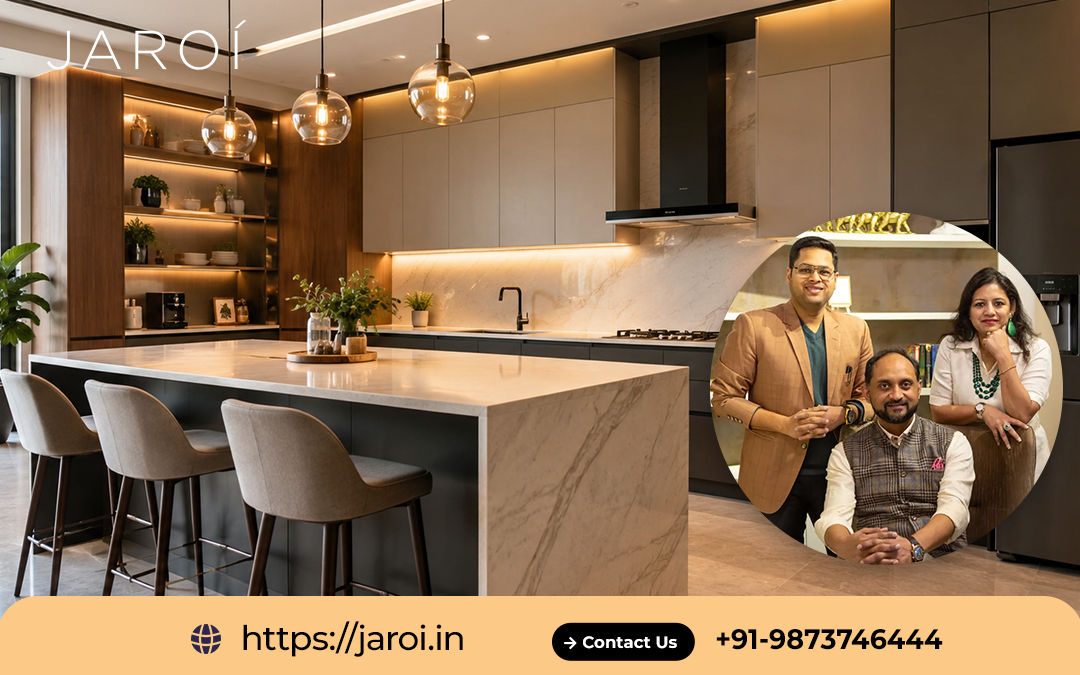
Kitchen storage deserves its own planning logic.
Heavy utensils, daily-use cookware, groceries, appliances and cleaning supplies should not all be treated as identical storage requirements.
Storage can be planned around frequency of use, accessibility and the location of the cooking and preparation zones.
For homeowners also planning the kitchen itself, Jaroi’s custom interior services can help coordinate kitchen cabinetry with the wider residential design.
Study and Home-Office Storage

A home office can become difficult to use when papers, books, chargers, files and equipment have no dedicated place.
Custom study storage can combine a work desk with overhead cabinets, bookshelves, drawers and concealed compartments.
The proportions should be planned carefully so that storage does not overwhelm the workspace.
For smaller rooms, vertical storage can be especially useful because it increases capacity without requiring a much larger floor footprint.
Children’s Storage Needs to Change With Them
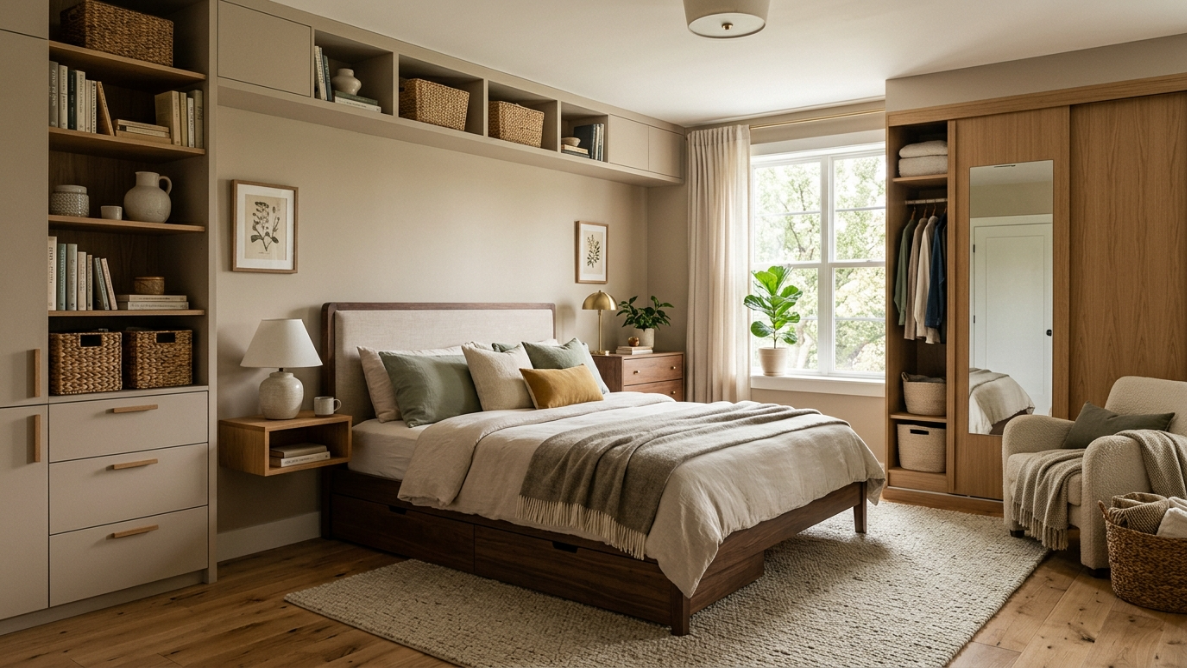
Children’s rooms often need flexible storage because the type of belongings changes over time.
A young child’s room may require space for toys, books and accessible everyday items. Later, the same room may need more storage for clothing, school materials, sports equipment and personal belongings.
Custom furniture can allow different storage zones to serve different purposes, while accessible sections can be kept at a height suitable for everyday use.
The objective is to create an organized room without making the storage difficult for the child to use.
Utility and Household Storage
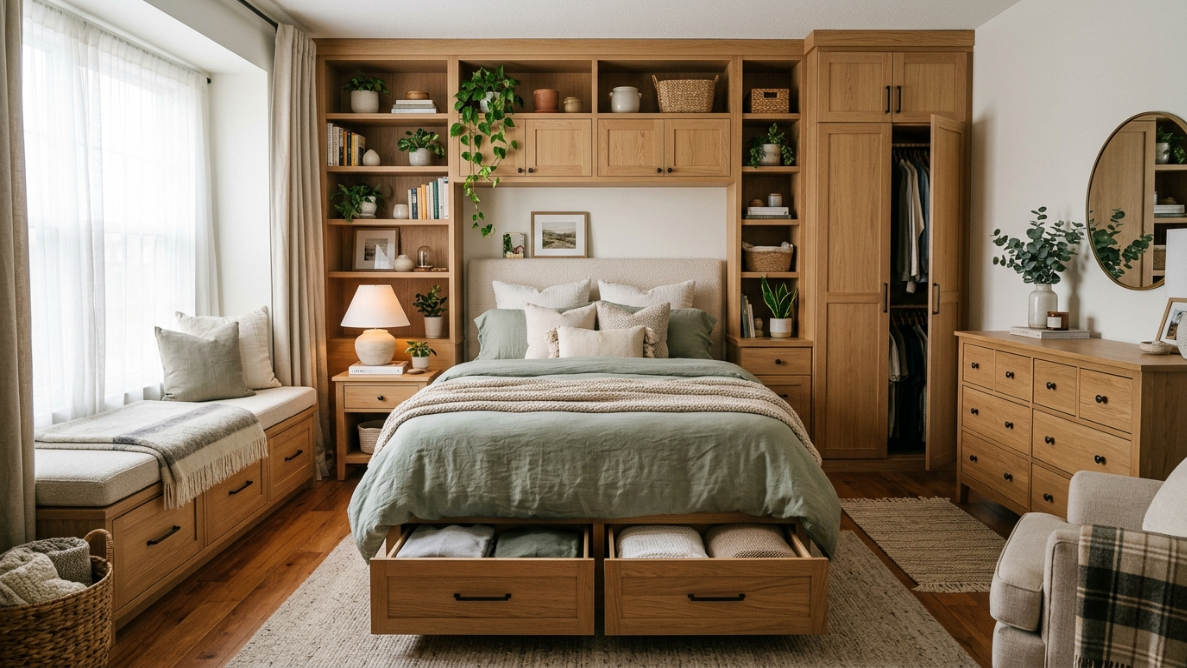
Some of the most useful storage in a home is rarely visible.
Cleaning products, ironing equipment, spare supplies, tools, laundry items and other household essentials still need dedicated places.
A utility cabinet or purpose-built storage area can keep these items organized without allowing them to spread across the kitchen, bathroom or service area.
When planning this type of storage, ventilation, accessibility and the nature of the items being stored should be considered rather than focusing only on appearance.
Materials Matter When Storage Is Used Every Day
Storage furniture experiences regular opening, closing, loading and unloading.
Material selection should therefore consider the intended application, expected usage and desired finish.
Jaroi Interiors works with materials such as solid wood, engineered wood and veneers, along with premium finishing options. The appropriate combination can vary according to the furniture design and the character of the surrounding interior.
The exterior finish is only one part of the result. Door alignment, drawer operation, internal organization, proportions and installation quality all contribute to how the finished storage performs.
Open Shelves or Closed Cabinets?
Neither option is universally better.
Open shelving works well when homeowners want books, artwork, decorative objects or selected collections to remain visible. It also provides easier visual access.
Closed cabinets are useful for items that create visual clutter or need to be protected from dust.
Many homes benefit from a combination of both.
A custom storage wall can therefore use closed sections for everyday household items and selected open areas for objects that homeowners actually want to display.
Storage for Compact Apartments in Delhi NCR
Compact homes require particularly careful storage decisions.
Instead of adding separate furniture wherever something needs to be stored, multiple functions can sometimes be incorporated into one carefully planned unit.
For example, a single wall may combine a television, books, display objects and concealed storage. A bedroom wardrobe may incorporate a dressing section. An entrance unit may combine shoe storage with a small seating area.
The objective is to increase usable storage without making the apartment feel smaller.
Storage for Villas, Bungalows and Larger Residences
Larger homes create more storage opportunities but also require greater coordination.
A villa or bungalow may need dedicated wardrobes, walk-in storage, linen cabinets, study furniture, entertainment units, crockery storage, utility cabinets and other built-in solutions.
Because these spaces are larger, furniture proportions become particularly important. Storage should support the architecture rather than simply occupy every available wall.
Jaroi Interiors can coordinate bespoke wooden storage with broader residential interiors so that different rooms maintain a consistent design language.
Built-In Storage Versus Freestanding Furniture
Freestanding furniture offers flexibility because it can be moved or replaced more easily.
Built-in storage, on the other hand, can make better use of exact wall dimensions and awkward spaces.
Custom built-ins can be particularly useful when:
- The wall has an unusual width
- Ceiling height needs to be utilized
- A recess needs to be filled
- Storage must align with existing architecture
- Concealed wiring or equipment needs to be accommodated
- The homeowner wants a seamless furniture appearance
The right choice depends on how permanent the requirement is and how the room is expected to evolve.
A Better Storage Plan Begins With Measurement
Before manufacturing custom storage, several site conditions should be considered.
These can include:
- Wall-to-wall dimensions
- Ceiling height
- Door and window locations
- Electrical points
- Switchboards
- Air-conditioning positions
- Skirting
- Wall recesses
- Floor levels
- Required walking clearance
- Existing furniture
Accurate site measurement helps prevent a common problem with custom furniture: designing something that looks correct on paper but conflicts with an architectural feature during installation.
Bespoke Woodwork for a More Integrated Look
Storage does not have to look like a collection of separate cabinets.
When cabinetry, wall panels, display units and furniture are designed together, they can create a more integrated appearance.
Jaroi Interiors specializes in bespoke wooden interiors and furniture, with an in-house manufacturing facility in Chhatarpur, New Delhi. This allows customized wooden elements to be considered as part of the overall interior rather than as isolated additions.
You can learn more about the company’s approach through the Jaroi Interiors About Us page.
Custom Storage Across Delhi NCR
Jaroi Interiors provides customized residential storage solutions across Delhi NCR, including:
- Delhi
- South Delhi
- Gurugram
- Noida
- Greater Noida
- Ghaziabad
- Faridabad
- Nearby NCR areas
The storage strategy can be adapted to the property itself, whether it is a compact apartment, builder-floor residence, independent house, villa, bungalow or larger luxury home.
Storage Should Make the Home Easier to Maintain

The best storage solution is not the one with the greatest number of cabinets.
It is the one that makes it obvious where things belong, keeps frequently used items accessible, hides unnecessary visual clutter and uses the available space intelligently.
That requires more than selecting a cabinet finish. It requires understanding the room, measuring the architecture, identifying what needs to be stored and then designing the furniture around those realities.
Jaroi Interiors brings together interior planning and bespoke wooden craftsmanship to create storage that is designed for the home rather than simply placed inside it.
View the Jaroi Interiors projects for examples of residential design and customized furniture work.

👉 Book Your Design Consultation Today
📞 Contact Jaroi Interiors
🌐 https://jaroi.in
Let’s Transform Your Space with Bespoke Craftsmanship
📧 Email: jaroiinteriors@gmail.com
📱 Mobile: +91-9873746444
👉 Book Your Design Consultation Today
📞 Contact Jaroi Interiors
🌐 https://jaroi.in
Let’s Transform Your Space with Bespoke Craftsmanship
📧 Email: jaroiinteriors@gmail.com
📱 Mobile: +91-9873746444
Frequently Asked Questions
What are custom storage solutions?
Custom storage solutions are furniture and cabinetry designed around the dimensions of a particular room and the homeowner’s specific storage requirements instead of relying entirely on standard furniture sizes.
What types of custom storage can Jaroi Interiors design?
Solutions can include wardrobes, TV units, bookshelves, crockery units, entryway storage, study cabinets, display units, utility cabinets, built-in storage and other bespoke wooden furniture.
Is custom storage useful for small apartments?
Yes. Custom furniture can use vertical space, narrow areas, corners and wall dimensions more efficiently, helping increase storage without unnecessarily consuming floor space.
Can storage be designed from floor to ceiling?
Yes. Full-height storage can make use of otherwise unused vertical space. Upper sections can be reserved for less frequently used belongings.
Can custom storage include both open shelves and closed cabinets?
Yes. Combining the two can provide accessible display areas while keeping everyday clutter concealed.
Can storage be matched with existing home interiors?
Yes. Materials, finishes, proportions and design details can be coordinated with the existing living room, bedroom, dining area or other interior elements.
Can Jaroi design storage for villas and bungalows?
Yes. Custom storage can be planned for villas, bungalows, independent homes, apartments and other residential properties across Delhi NCR.
Can custom storage include a TV unit?
Yes. A TV unit can be developed as part of a larger storage composition incorporating cabinets, drawers, shelves and display areas.
How should I decide what storage I need?
Start by listing what you need to store and how frequently you use it. Then consider where each category should be accessed, whether it needs to remain visible and how much space it requires.
Does Jaroi Interiors provide custom storage in Noida and Gurugram?
Yes. Jaroi Interiors serves residential clients across Delhi NCR, including Noida, Greater Noida, Gurugram, Delhi, South Delhi, Ghaziabad and Faridabad.